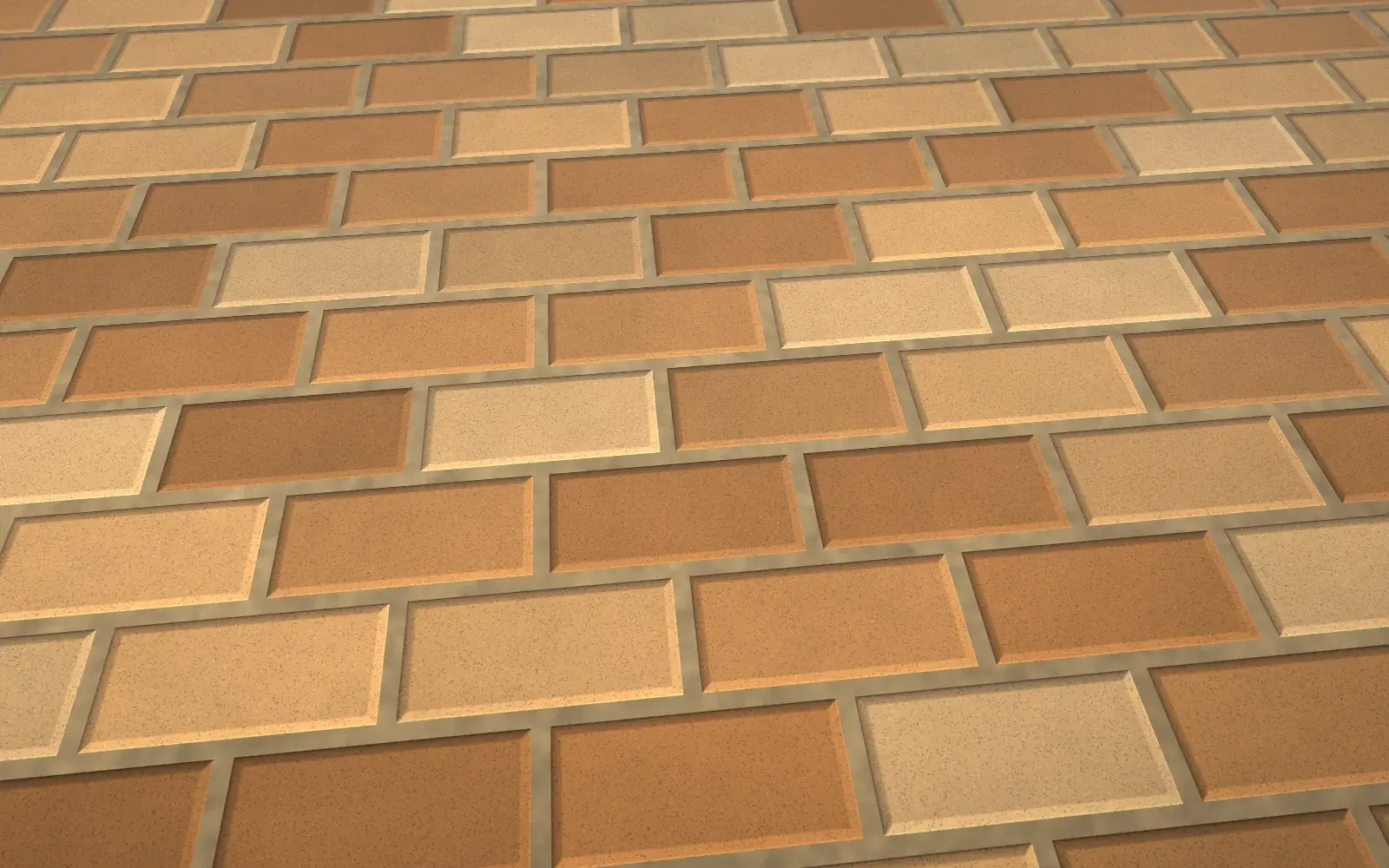
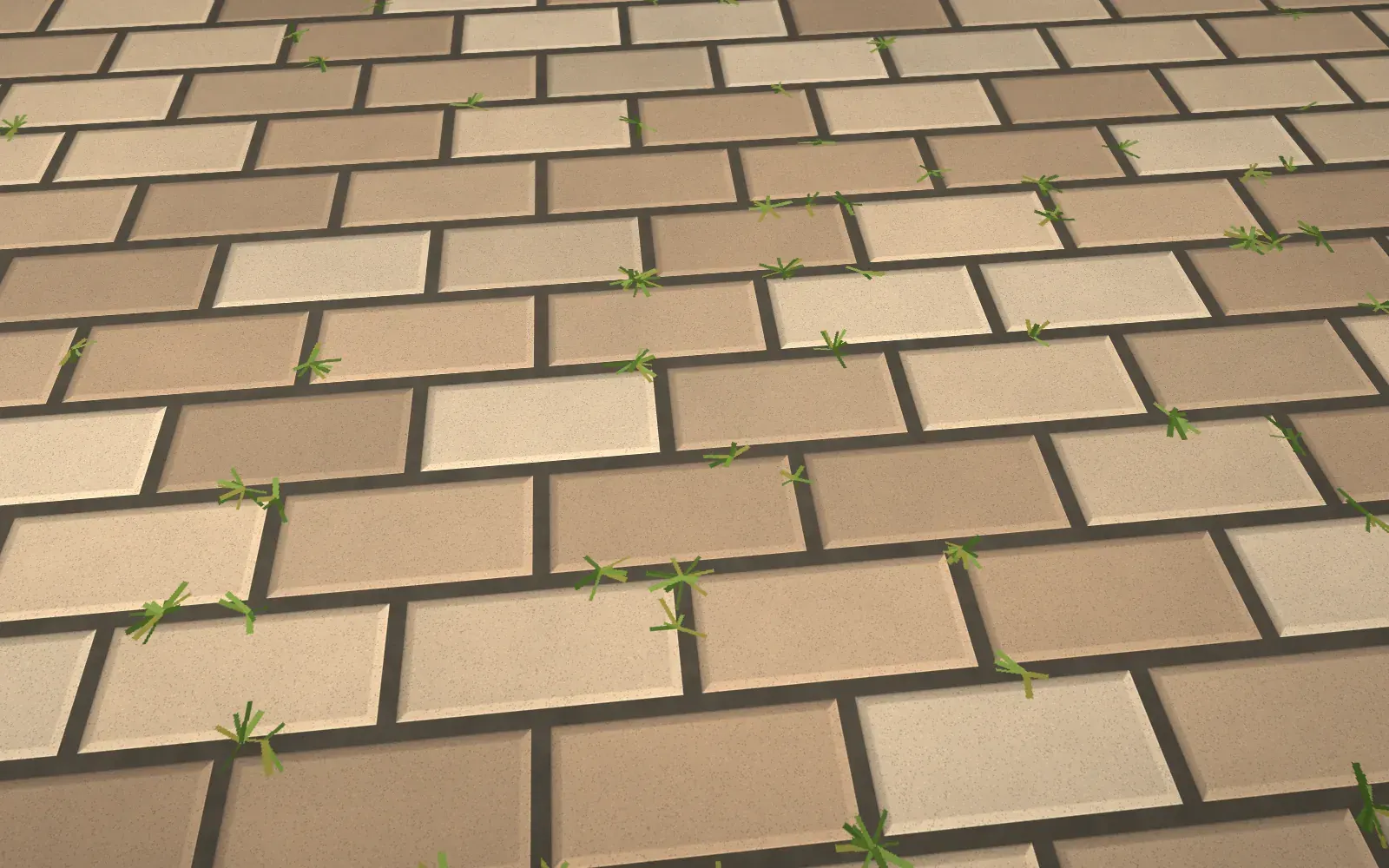
How this protects your pavers
Full, firm joints keep pavers from shifting and stop weeds from pushing them apart. Sealing over the new sand helps it stay put through storms, which keeps the whole surface solid longer.
Signs your joints need re-sanding
- Joints that look empty or sit lower than the paver edges.
- Weeds or grass growing between pavers.
- Ant hills in the joints.
- Pavers that rock or shift when you step on them.
How we do it
- Clean the joints and let the surface dry fully.
- Sweep polymeric sand deep into every joint and compact it with a vibratory plate.
- Clear all residue off the paver faces to avoid haze, then activate the sand with a controlled mist.
Polymeric Sand questions
Does polymeric sand stop weeds completely?
It greatly reduces weeds and ants by hardening the joint, though windblown seeds can occasionally root on the surface. Those pull out easily.
Can you add polymeric sand without sealing?
Yes, but we recommend sealing afterward to protect both the pavers and the new joints.